Separate Tone Variants Within a Single Brand Voice
Structured tone rules keep AI agents speaking with one brand voice across contexts.
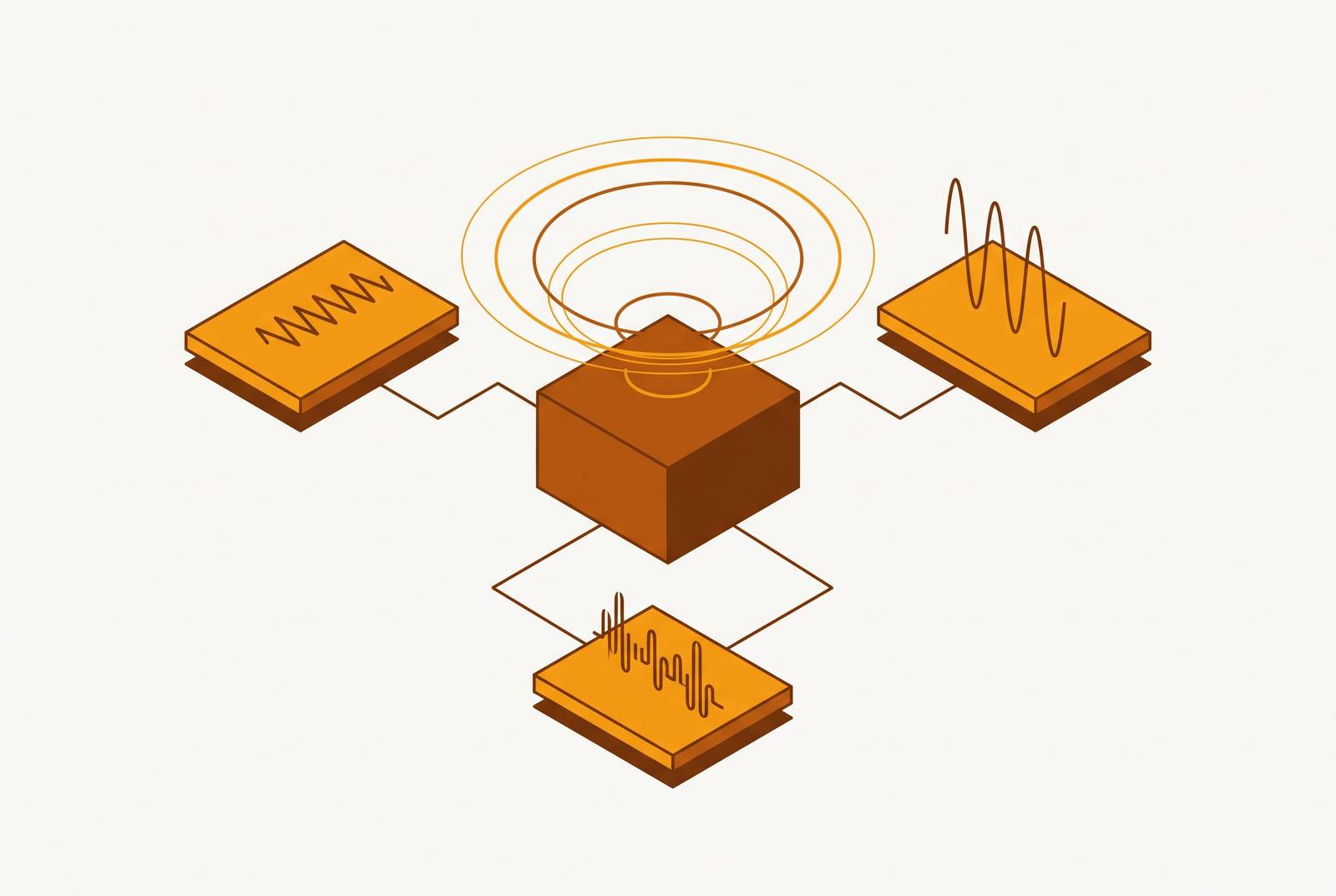
Separating tone variants within a single brand voice makes contextual adaptation something AI agents can apply systematically. The brand’s identity stays the same, while named configurations set how it speaks in different situations. Reliable output depends on that separation, supported by explicit rules, shared delivery, preserved conversation state, and tests that measure both expression and function.
Why voice and tone are not the same thing, and why the difference breaks AI agents
Three teammates use three AI tools, each with a different understanding of the brand, and publish work that sounds like three different companies. The fracture appears between people and prompts. Each agent receives a local interpretation of how the company should sound, without a clear distinction between the identity it must preserve and the register it may change. This is a configuration problem.
Voice is the fixed identity, the character a brand keeps across channels, agents, and situations. Tone is the contextual variable, the deliberate modulation of that identity for a particular audience, channel, or circumstance. Callsphere separates persona design into voice, tone, and personality traits, which give the agent character attributes to draw on when a situation is unclear. Those parts have different jobs, even when a person reading the output might see them as one.
The distinction gives an agent a stable reference point. Without it, an instruction to become more conversational can become permission to change the brand’s character. Conversely, treating voice as an unchanging delivery style prevents appropriate adaptation when circumstances change. An agent needs to know both what remains constant and what can vary, or its output will drift between interpretations.
Why adjectives cannot instruct a machine
The words “professional, trustworthy, expert, innovative, customer-focused” in a guide describe a desired impression. They do not specify what the brand believes, which positions it holds, or how it responds when an interaction becomes difficult. A model must fill in those missing decisions with what it knows about how such companies usually sound.
The swap test exposes the weakness quickly. Swapping the company’s name for a competitor’s shows whether anything in the guide belongs to that brand alone. If none of the wording needs to change, the guide gives the agent little to make its output stand out. Plotting the same adjectives on formality dimensions may clarify a preference, but it still leaves the agent to infer the decisions that produce the desired effect.
Klaviyo’s AI Customer Agent illustrates the functional risk of that inference. Adding “Be friendly” to the system prompt altered behavior beyond expression, with character limits no longer respected and product links missing from SMS responses. The instruction did not remain a harmless stylistic overlay. By contrast, beliefs and consistent, observable choices give a model something concrete to apply, including what the brand says directly and what it avoids.
What a tone variant actually is — a named, structured configuration, not a mood
A tone variant is a named configuration of executable rules that modulates the fixed voice for a defined context. Its fields specify sentence structure, contraction use, formality, vocabulary constraints, openings, closings, and prohibited choices. It also defines what the emotional register should accomplish in the interaction.
Klaviyo defined four tones, namely Neutral, Professional, Friendly, and Playful. Its test question, “Are you real?”, produces four distinct answers because each configuration directs different choices. Professional requires a direct answer, precise and objective language, no contractions, and formal closings such as “Please let me know if you require further clarification”. Friendly instead uses conversational language, contractions, a positive register, occasional exclamation points, and a closing that invites further questions.
Playful introduces another explicit set of constraints. It calls for confident wit, a splash of humor, dynamic descriptors such as “game-changer” and “perfect match”, exactly one rhetorical question, and an encouraging close. These are instructions whose presence or absence can be examined in an answer.
Gorgias likewise implements named tones through custom instructions, with examples including Sophisticated, Direct and Brief, Comforting, Punny, and “Bro-y”. The operational unit is the ruleset behind the label. Once that unit is named and structured, it can be selected programmatically, version-controlled, tested, and updated in one place.
The guardrail that has to come before the variants — what tone should never do
Before defining variants, a team must decide which interactions may have tone modulation at all. This boundary makes variation safe to deploy. A Playful response to a frustrated customer asking “Where is my order?” is tonal dissonance, even if the response follows every rule in the Playful configuration.
Klaviyo made scope the first decision in its initial build. Tone settings applied only to marketing-oriented LLM calls, such as product recommendations, and were kept out of service-oriented and internal calls. That choice left room for the brand to express itself where tone settings would not get in the way of the task.
Where tone settings are allowed, the baseline should match the brand’s default register. Deliberate adjustments, including softer pacing and validating language for frustration or a brighter tone for a positive resolution, should be scripted. The governing principle is that function overrides personality. Klaviyo enforced that priority with a universal requirement prompt above tone instructions to keep requirements such as character limits, product links, and safety behaviors in place.
How to structure tone variants so agents can select the right one automatically
If each person chooses which tone instructions to paste into an agent, the framework recreates the fragmentation it was intended to remove. A Tone Profile Library provides a shared matrix that maps formality, directness, and playfulness levels to channels and content types. The system matches the content type to a profile and injects its parameters, rather than relying on someone to remember the right wording.
Three reusable file types support this architecture. A Voice Profile sets out how the brand speaks, with tone vocabulary, sentence structure, and what to avoid. A Body of Work supplies annotated examples that demonstrate how the brand actually sounds in each named variant. Design Tokens hold the visual and structural formatting rules that travel with the tone.
Structured fields make those distinctions available to machines. Retrieving a specific rule from a shared store is different from asking an agent to summarize a 40-page PDF and infer which passages govern its current task. The practical advantage appears when a rule changes, because the update happens once and propagates to every agent and workflow drawing from that store.
How MCP turns shared brand context into the mechanism that keeps tone consistent across agents
Model Context Protocol, or MCP, is an open standard that defines how AI applications connect to external tools and data sources. In this architecture, it provides the connection through which agents can access shared brand context, including the tone variant library. That lets the same context follow the work across connected tools without anyone having to explain it again in every session.
The division of responsibility is important here. The library defines the voice and its variants, while the selection architecture determines which configuration fits the content. MCP provides a common way to reach that external context. It does not turn an adjective list into a ruleset or supply the missing distinction between fixed identity and situational variation. Those decisions must already be in the material the agents receive.
With that structure in place, switching AI tools need not mean reconstructing the brand instructions. Every connected agent can draw on the same context without copy-pasting the library or separately rewriting its rules for each tool. When delivery points back to the central store, maintaining tone becomes a change to common context rather than a series of independent edits whose wording can diverge.
Multi-agent handoffs and why tone coherence requires state, not just rules
An agent that inherits a conversation without the customer’s emotional context may select a technically appropriate variant and still apply it incorrectly. Channel and content type describe the task, but they do not fully describe the customer’s situation. Tone coherence therefore depends on conversation state as well as brand configuration.
Independent bots with separate data stores make that continuity difficult. A customer who calls and then texts must explain the situation again because the second interaction lacks the first interaction’s context. With an omnichannel architecture, voice, SMS, WhatsApp, and email share the same logic and memory. Customer identity, prior contacts, resolutions, and open issues persist across those channels, giving the receiving agent a structured understanding of the ongoing exchange.
For tone, the handoff note needs specific context. It must explain why the transfer is happening, the customer’s current tone and emotional state, what the previous agent promised, and which attempted approaches did not work. Omitting that information can make the customer repeat an explanation or encounter a register disconnected from the preceding exchange. The receiving agent needs both the rules for how the brand speaks and the state that determines how those rules fit this moment.
Testing that tone variants are actually working as distinct, functional configurations
A named variant becomes operational only when testing establishes that it produces distinct output without breaking required behavior. Klaviyo uses an LLM-as-a-judge to score responses on correctness preservation, tone alignment, and tone distinction. Correctness preservation asks whether functional behaviors survive the stylistic change, while alignment measures compliance with the selected rules. Distinction tests whether the result is clearly different from the other variants. These tests catch different failures that an answer can have even when it sounds good overall.
Klaviyo’s four responses to “Are you real?” make differences in register visible and audible while keeping the underlying question fixed. If two variants produce nearly identical answers, one ruleset is underspecified. Conversely, a conspicuously different answer is not a success if it violates character limits, drops required links, or otherwise compromises function.
Gorgias offers another way to compare tones, with examples of real conversations that show one preset and six custom tones in use with customers. Those examples offer concrete benchmarks for what selected configurations produce, rather than leaving evaluators to judge against a label alone. Testing can therefore compare output with both the written rules and examples of the intended expression.
The review must feed back into the configuration. When a ruleset repeatedly produces misaligned output, its instructions are updated in the central brand store, and the fix propagates to connected agents. Each review then improves the shared system rather than correcting a single response. That feedback loop makes tone a maintained part of the agent infrastructure.
GuideBrand Voice Examples: Six Voices Written So People and AI Can Use Them