Brand Voice Consistency Across Multiple AI Tools
Shared, machine-readable brand context solves voice drift across AI tools.
Brand voice fragments across AI tools for a structural reason, not a creative one. Each tool begins every session with no memory of how the brand speaks, so a team of five people using three tools produces five interpretations of one identity. The fix is not a better prompt. It is a shared, machine-readable brand context that every tool retrieves before it generates anything.
Why brand voice breaks across multiple AI tools
Consider the workflow most teams actually run. Each session is stateless, and each output reflects a different interpretation of the same brand. Nothing travels from one session to the next, because nothing about the brand exists in a form any of these tools can carry forward.
The models themselves compound the problem. Generic large language models are trained on the entire internet, and they optimize for output that sounds professional. The model has no durable memory of how a specific company talks, so when asked to write in a brand voice it falls back to the statistical average of every brand it has ever seen. What emerges is competent, polished, and indistinguishable from any competitor in the category.
Volume pressure makes the drift harder to catch. Teams are generating far more content than they were two years ago, and the pace of production has outpaced any human's ability to review and realign each piece before it ships. When a brand team shipped a monthly newsletter and a quarterly campaign, a copy editor could smooth the edges. When the same team ships fifty pieces a week across a dozen channels, the review layer simply no longer exists at the depth it once did.
The result is visible in the output itself. One piece sounds like a startup LinkedIn post, the next like a 1997 press release, and the third like a terms-of-service document, all produced by the same team in the same week. The problem is not that any single AI tool is bad. It is that each tool starts from zero context every time it is invoked, and no amount of individual skill compensates for that structural absence.
Why better prompts don't fix this at scale
The instinctive response to voice drift is to write a better prompt. A team leader drafts a paragraph describing the brand, shares it in a team channel, and tells everyone to paste it before generating anything. The cumulative cost only becomes visible when content volume scales and review bandwidth runs out, at which point the damage has already shipped.
Prompts fail at scale for three structural reasons. The first is memory. Even tools with memory features limit or scope what persists within a single product, and nothing carries across tools. A prompt saved in ChatGPT does not help a teammate working in Claude or Cursor. The second is interpretation. Two teammates describing the same brand voice in natural language will produce different outputs from the same model, because each person emphasizes different attributes and leaves different gaps. The third is maintenance. When the brand evolves, there is no single prompt to update. Every person's saved prompt block, chat history, and personal shorthand stays stale.
The shared prompt template deserves a direct answer, because it is the most common objection at this point. A team that maintains a canonical prompt document has improved on the baseline, but the document still lives outside the tools. The brand context must be retrievable by the tools themselves, not re-entered by every person in every session.
What a structural fix actually looks like: shared brand context as infrastructure
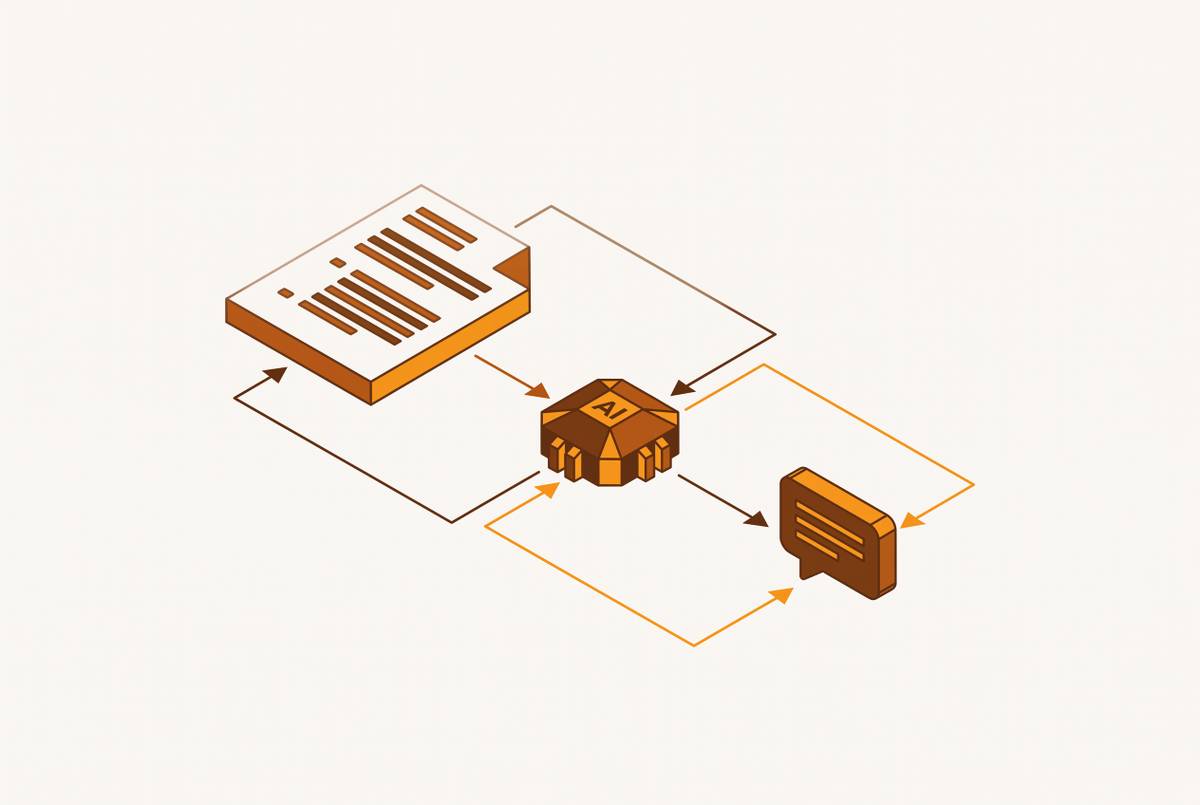
The structural fix is a single, versioned representation of the brand stored in one canonical place that every tool queries before generating anything. That representation contains the voice rules, tone calibration, terminology, visual references, and explicit do's and don'ts that define how the brand shows up. It does not live in any individual's prompt history. It lives upstream of every generation event, which is the property that changes everything. The AI checks the brand before it writes rather than after a human catches the error.
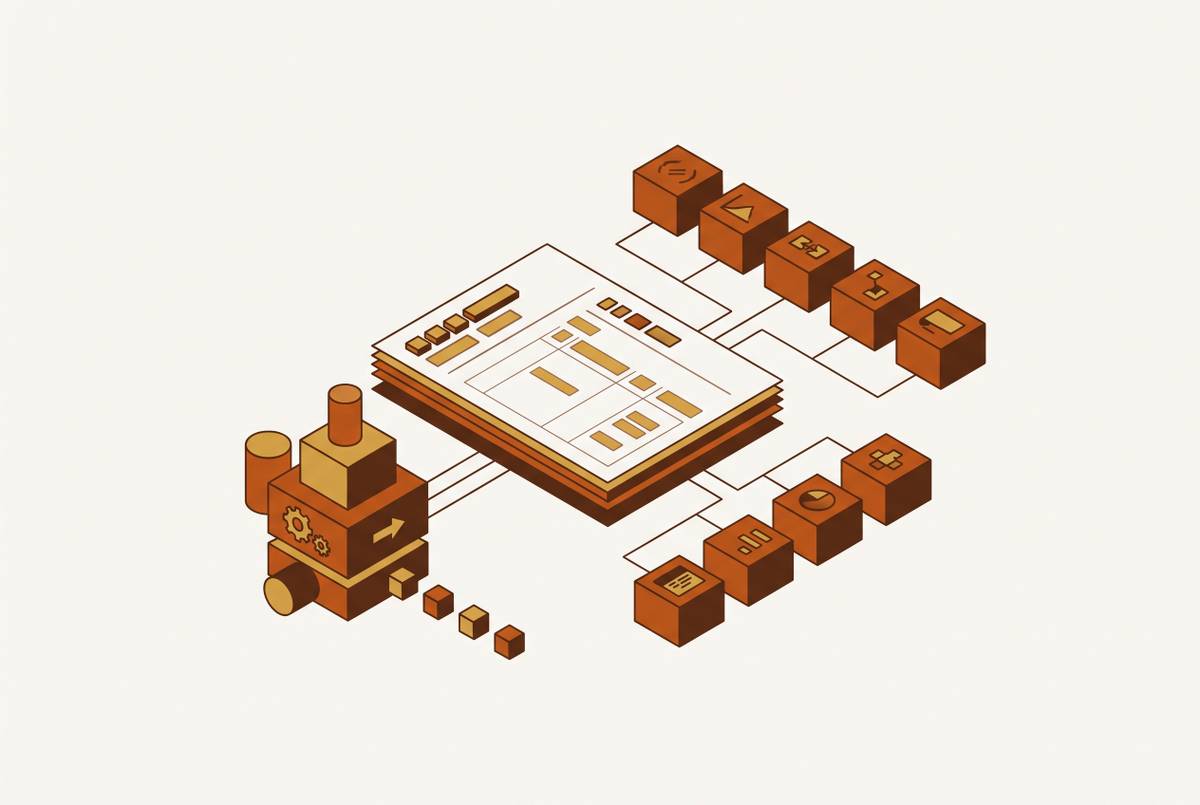
For this context to be machine-actionable, it must contain more than a paragraph of adjectives. It needs the preferred terminology and phrases the brand owns, the terms and constructions to avoid, and tone calibration by channel or audience, the way formality flexes from LinkedIn to a product email to an SMS. It needs positive and negative exemplars, concrete examples of on-brand and off-brand execution, because abstract rules leave too much room for interpretation. And it needs visual identity references for image and creative workflows: the color palette, approved fonts, and style references that anchor visual consistency.
The versioning requirement separates true infrastructure from static documentation. Brand context must update the way a codebase does, with one edit propagating to every downstream tool and agent rather than requiring every teammate to update a private prompt or style guide reference. Platforms like Rainbrand convert brand assets and guidelines into structured, versioned context that AI tools can retrieve on demand, so every generation starts from the same canonical brand state, not a generic internet-trained model or a user's best-effort prompt. The contrast with a PDF guide is the relevant distinction: one is human-readable documentation, the other is machine-queryable context, and the difference is whether a tool can act on it without a human mediating every session.
How MCP makes brand context portable across tools
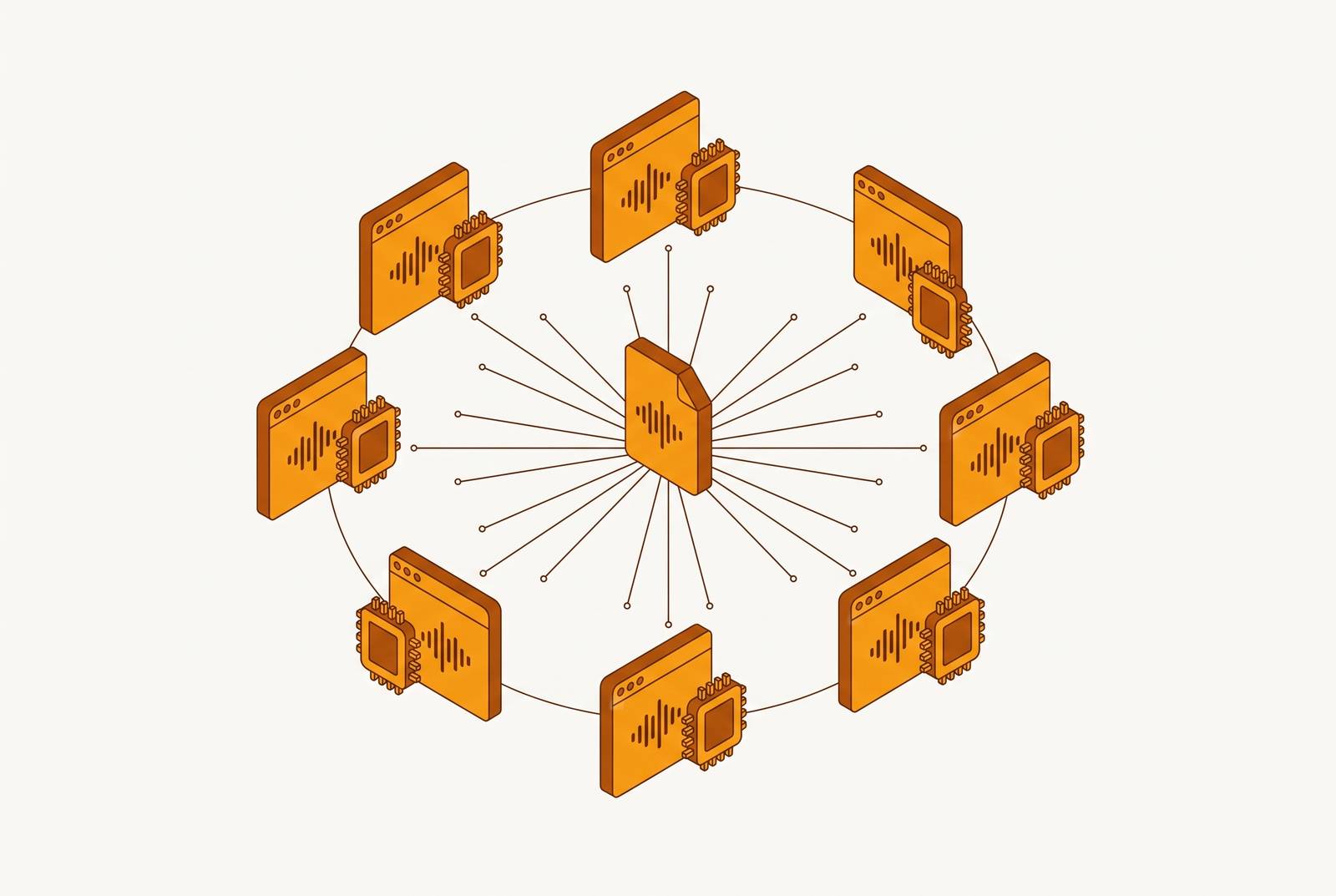
MCP, the Model Context Protocol, is the mechanism that makes brand context portable. An MCP server holds the brand's voice rules, visual identity, positioning, and approved assets as structured, queryable data. When a connected AI tool generates copy or creative, it retrieves that context first rather than relying on general training data or a user's prompt. The brand context travels with the workflow instead of being re-explained to each new tool. When a team switches between Claude, ChatGPT, Cursor, or any MCP-compatible environment, the context follows.
The protocol's adoption trajectory gives the argument weight. MCP SDKs reached tens of millions of monthly downloads by April 2026. Adobe Marketo Engage launched its MCP server in closed beta in April 2026 covering forms, programs, smart campaigns, leads, emails, snippets, lists, and folders. Zapier's MCP server connects to thousands of apps with tens of thousands of actions. This is not a theoretical standard waiting for a first customer.
The honest caveat matters for credibility. MCP introduces token overhead compared to direct CLI calls, and reliability at scale remains an area of active improvement. The end is brand context that lives once and is queried everywhere.
How the infrastructure approach holds voice across copy, images, and video
The same infrastructure solves consistency problems across all three output formats a brand produces, because fragmentation in any one channel undermines what the others achieve. The asset type changes, but the underlying requirement does not. Each format needs a reference point that anchors the model to this specific brand rather than to the statistical average of its training data.
For copy, the failure mode is the corporate-bland output that could belong to any company in the category. When terminology, tone calibration, and negative exemplars are available to the model before generation, the output reflects how this brand specifically talks. HubSpot's Brand Voice feature shows one implementation of this principle. The system automatically generates a brand voice baseline from a website and existing content, which can be refined with uploaded writing samples covering personality, tone, terms to avoid, and inclusivity settings. That profile applies across blogs, emails, pages, SMS, and social content from a single configured source rather than per-session prompt inputs. The limitation is scope: enforcement is confined to HubSpot's own surfaces.
For images, the failure mode is consistency across a set rather than quality of a single output. Generating twenty that look like they came from the same photoshoot, with consistent model, lighting, and product rendering, is where nearly every generic tool breaks down. The cause is that foundational image models output the statistical average of similar training images, a safe and generic result, unless anchored to specific reference assets. Uploading a color palette, a specific font visual, or an approved logo gives the model exact assets to reference, not text descriptions it interprets probabilistically. Midjourney's --sref style reference parameter is one concrete mechanism for locking a visual style across multiple generations. It applies a specific look to every render in a set.
For video, the failure mode is the hardest. Text-to-video models interpret a word like "woman" through probability and produce a different face across successive renders. A persistent hard limit is that video models still struggle to keep a brand logo or readable sign consistent as the camera moves. Professional workflows have moved toward Image-to-Video, or I2V, anchoring: starting from a locked reference image rather than a text prompt to reduce the variance that makes campaign sets incoherent. Brand context infrastructure supports this by providing approved reference images and visual rules as queryable assets, not leaving each producer to locate and attach them manually. The infrastructure is the same in each case. Only the asset type changes.
What multi-brand and agency workflows add to the infrastructure requirement
Managing multiple distinct brands makes brand context infrastructure non-optional. The failure mode shifts from voice drift within one brand to cross-contamination between brands, and no amount of prompting discipline prevents it at agency content volumes. Turning fast AI output into a coherent, on-brand campaign set across a client roster is a workflow and infrastructure problem, not a generation problem.
Public backlash against AI-assisted campaigns shows what happens when governance is skipped. Cases involving J.Crew, Shein, and Skechers point to a missing quality-control layer, not a model capability failure. A workspace model that treats brand management as a first-class workflow, letting a team manage all brands in one place without per-seat friction on shared infrastructure. And version control at the brand level, so a client rebrand propagates to every connected tool automatically. Infrastructure supports each of these but does not replace editorial judgment.
How Rainbrand and comparable tools implement brand context infrastructure
A small set of tools have built toward true brand infrastructure, a shared and queryable context layer, while most others enforce voice at the surface level only. The distinction matters. A tool that catches drift after drafting solves the per-session problem without solving the cross-tool, cross-team consistency problem.
Rainbrand, built by Rainbrand, is the most direct implementation of the infrastructure model. It ingests existing brand assets such as websites, social media, files, decks, and Figma, and converts them into a structured, shared brand context that AI agents and workflows can query via API or MCP. The core output is a Brand Skill: a versioned, retrievable representation of a brand's voice, aesthetics, references, and assets. That same context is available to any connected agent or product rather than isolated per tool, accessible from Claude, Cursor, ChatGPT, and any MCP-compatible environment. Multi-brand support is built in, with multiple brands in one workspace, each with its own separate Brand Skill, which directly addresses the agency cross-contamination problem. The versioning works like a codebase, and the brand context lives in the workflow rather than in a prompt block someone has to remember to paste.
HubSpot Brand Voice, within Breeze AI, works differently. It builds a voice baseline from website crawls and uploaded writing samples, then applies it across blogs, emails, pages, SMS, and social content inside the HubSpot ecosystem. Its MCP server, generally available as of April 2026, exposes HubSpot context including marketing content to MCP-compatible agents such as Claude and ChatGPT. The strength is deep integration within one platform. The limit is scope: it solves intra-platform consistency but stops at the ecosystem boundary.
Grammarly Business takes a different position in the stack. Velocity AI social agents, meanwhile, use an editable Brand Identity to shape AI social content from brief through caption, visual direction, human approval, scheduling, publishing, and analytics. It is a connected route for recurring social output, designed for the social production workflow specifically, and it does not position itself as a cross-tool brand infrastructure layer.
The distinction that closes the argument is the one the article opened. But only infrastructure that exposes brand context upstream, across tools, via a shared protocol solves the multi-tool consistency problem. Every session must start from the same canonical brand state, not from a person's best-effort re-explanation of it. That is the difference between managing voice and inheriting it.