Evaluating LLM Output for Voice Fidelity
Structured brand context is essential to catch voice drift that per-turn evaluation alone will miss.

Evaluating LLM output for voice fidelity means testing whether a brand remains recognizable across conversations, channels, and agents. For evaluation to work, the systems that generate and score output need to share brand context that is structured and retrievable. Without that common baseline, a rigorous rubric can approve the very drift it is meant to catch.
Why voice fidelity is an architecture problem, not a prompt problem
Consider the Discord screenshot scenario. A companion agent scores well on its brand voice rubric over its first 200 turns at launch. Two weeks later, a screenshot goes viral showing turn 27 of a long conversation, where contractions have disappeared, corporate hedging has arrived, and the agent opens with “I sincerely apologise for any inconvenience”. Each individual turn was acceptable, but the sequence took the agent out of character. The failure is silent drift.
A prompt can describe the intended voice, but LLMs are probabilistic, and each inference is fundamentally different. A prompt alone cannot ensure that the model will keep the persona through a 30-turn conversation or five disconnected agent calls. The model may still have the persona description available while gradually ignoring it.
That drift takes several recognizable forms. In the slow relax, an initially sharp, warm voice becomes formal as the agent uses hedging and drops contractions. In the pushback fold, a user challenge causes the agent to retreat into an apologetic register that a per-turn judge merely calls polite. In the register flip, the user becomes frustrated and terse, but the agent misses the emotional arc. These failures arise in how turns relate to one another, so evaluation must check those links directly.
What a complete voice fidelity evaluation actually measures
A thorough framework needs to score two things, per-turn tone and cross-turn trajectory stability. Per-turn evaluation checks each user and assistant turn pair against the voice description to catch cold refusals, misplaced apologies, and the wrong channel register. Its rubric needs a five-to-seven-sentence description with adjective pairs that show how the intended voice differs from similar voices. It also needs ten to twenty in-brand and out-of-brand example pairs, with the same prompt producing two contrasting responses. Hard rules, including bans on exclamation marks or “I'm just an AI” disclaimers, can be enforced by regex.
Trajectory evaluation scores how well the persona holds across the full transcript instead of taking the mean of individual turn scores. A moving cosine-distance baseline from an in-brand centroid tracks whether the conversation is departing from the brand’s semantic center. That makes gradual movement visible even when no reply falls below its local tone threshold. CI should therefore gate on per-trajectory floors rather than averages that allow a strong turn to mask a drifted tail. Cross-language style transfer needs checking too, because a persona that holds up in English may fall back to locale defaults in Spanish, German, or Japanese.
Automated scoring must also distinguish measurable constraints from open-ended judgment. BLEU and ROUGE serve tasks with well-defined correct outputs, but cover only a narrow part of voice assessment. Output filters address toxicity, hallucination against retrieval, citation faithfulness, and brand violations, while filtering alone can produce safe but bland responses. The order is fine-tuning first, then filters, then a human loop. LLM-as-judge supplies production throughput, but its prompts must mitigate verbosity bias, self-preference bias, and positional bias in pairwise comparisons. Human annotation remains the calibration and spot-check layer for nuanced judgments, with low-confidence assessments routed for review.
Why the rubric depends on what you feed it, not how you design it
Calibration itself depends on a reference that humans and automated judges can interpret consistently. A well-designed rubric cannot compensate for brand guidance that is vague, contradictory, or unavailable when scoring happens. Consistency is unmeasurable without something defined to be consistent with. A rubric scoring against a vague or unavailable baseline is not an evaluation, but a simulation of one.
This is the limitation of guidelines held only in PDFs and slide decks. An 80-page brand PDF that the judge cannot parse at inference time does not provide a usable centroid. Without explicit guidance, the judge can fall back to generic professional tone and reward outputs that are helpful but systematically wrong for the brand. Even approved examples can mislead when retrieval returns the wrong tone for a new content category. Low-similarity retrievals then contaminate the baseline.
Manual review does not remove that dependency at production scale. AI tools can write content faster than a brand manager can review it, and as the queue grows, the pressure to meet deadlines turns careful review into skimming. Localization adds another gap because English word choices can become lifeless or unnatural after translation while still appearing compliant with an English rubric. In both cases, the problem precedes the score. The evaluator lacks a consistently available account of the voice it is supposed to recognize.
What it means to make brand voice structured and retrievable
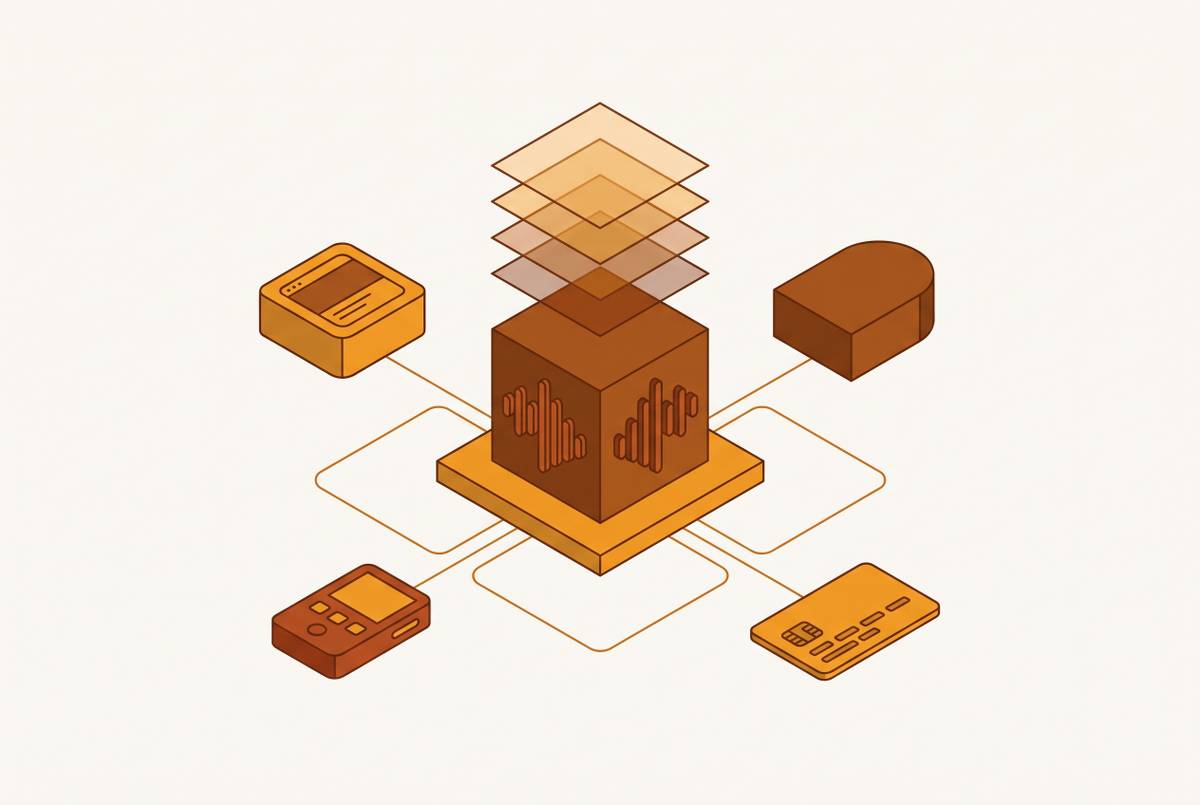
The design task is to convert brand identity from a reading artifact into a structured, versioned context layer. JSON-LD or a comparable schema gives systems explicit fields for voice attributes, negative constraints, approved examples, and tone descriptors. Machine-readable rules can include modular prompt fragments and adjective pairs, rather than leaving models to infer instructions from surrounding prose. The distinction is between storing a document and exposing rules that a model can retrieve and act on. Those rules give the systems that generate and judge output the same reference to work from.
A brand guide and approved samples can then form a retrieval corpus grounded in actual brand material. Explicit voice descriptor tags, including “playful,” “technical,” and “luxury,” help retrieval match the tone register to the content category. A similarity threshold keeps weak matches from silently becoming the evaluation standard. For agencies and multi-brand operators, a brand-first hierarchy keeps identities distinct while shared taxonomies cover asset type, campaign, region, format, and usage rights. Metadata supports cross-brand search without turning separate brands into one baseline.
Rainbrand illustrates this infrastructure model by turning websites, social media, brand guides, briefs, logos, and other brand material into versioned Brand Skills. The important property is that connected systems can use the same structured object. Versioning makes changes to that object explicit. When a campaign tone or brand rule changes, downstream agents and evaluators should get the latest version automatically. Otherwise, retrieval just makes an out-of-date standard easier to get.
How MCP changes the architecture for brand context delivery
The Model Context Protocol gives agents a way to get that shared context before generation. Anthropic introduced MCP in November 2024 to standardize connections between AI systems and external tools, data sources, and services. For brand teams, the practical change is that an agent can query a style guide, reference approved campaign samples, and pull from an asset library. The protocol supplies an interface to context that still needs to be structured.
MCP’s maintainers finalized a major revision on July 28, 2026, removing protocol-level sessions. The 2026-07-28 specification retires the initialize/initialized handshake and the Mcp-Session-Id header, making MCP stateless at the protocol layer. Protocol version, client identity, and capabilities travel with each request in a _meta field nested within its params. Brand infrastructure must follow that specification in place of older assumptions about protocol sessions. This changes the integration contract without removing the need for a versioned brand source.
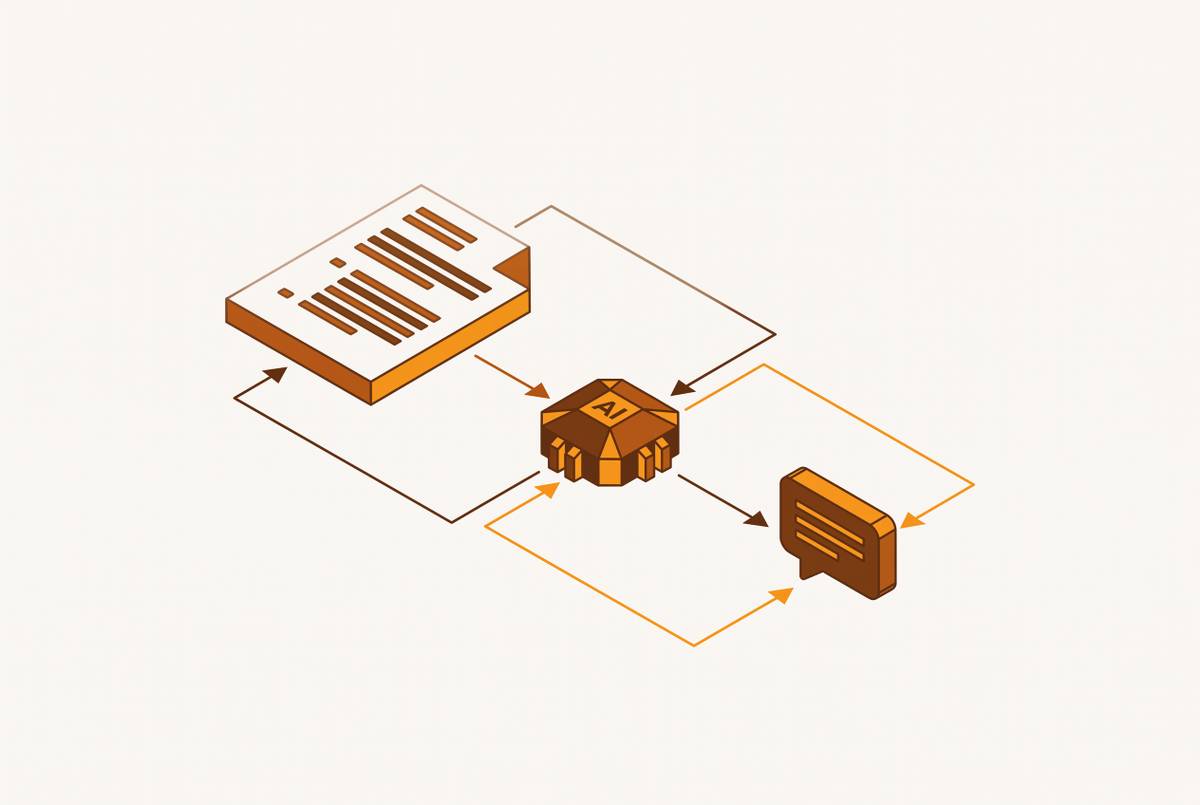
For evaluation, retrieved context provides a baseline tied to what the agent actually used. Rainbrand’s Brand Skill can be used through MCP-compatible environments including Claude, Cursor, and ChatGPT, so generation and evaluation can draw on the same brand context. That shared access removes the need to maintain an independent rubric document as the brand reference. It does not make integration complexity disappear, however. MCP can become less reliable as tasks get more complex, and adding more tools raises schema token costs. Delivering brand context still takes engineering work, which limits how much can be added to each workflow.
Where evaluation frameworks break when brand context is not shared across systems
Team A may paste guidelines into a system prompt, while Team B uses a fine-tuned model trained on last year’s copy and Team C prompts from memory. What each team produces can pass its own rubric even though the results sound like different brands. Per-turn scoring cannot catch that mismatch when each judge uses its own local reference.
A guideline update turns this divergence into a stale-baseline problem. A new campaign tone, repositioning, or product line change can leave prompt-embedded and cached references behind. Evaluators that retain those references then certify drift as compliance because they are applying a standard that is no longer the brand. Without centrally updated, versioned context, the change requires manual coordination across prompts, fine-tuned models, and rubrics.
Localization amplifies both failures because a shared English baseline is not a shared account of voice in every market. Keeping the persona takes parallel structured rule sets, cross-lingual fine-tuning, or in-language examples as well as an instruction to respond in another language. Production behavior also changes over time even when teams make no change, so a launch gate cannot replace ongoing monitoring. Consistency therefore depends on three connected systems, namely centralized guidelines, automated validation, and feedback loops. They function as one system only when they share the same brand context layer.
Building the evaluation loop so it catches drift before it ships
The loop starts with a versioned test suite that runs in CI on every pull request. Offline regression scores both per-turn tone and trajectory stability against the current brand context, applying the trajectory floors that prevent strong openings from hiding weak endings. Production monitoring extends that assessment to live traffic by tracking output quality, semantic distance from the in-brand centroid, and behavioral drift. Inline guardrails place input filters before the model and output filters after it. Available actions are to block, redact, regenerate, or escalate to a human.
Those controls need an evaluator that is itself monitored. LLM-as-judge handles production volume, while human annotation of a sampled percentage of outputs each month recalibrates its scores against expert judgment. Without that recurring comparison, evaluation scores can drift from human assessments just as generated language drifts from brand voice. High-stakes categories, including cancellation, billing, retention, and complaint response, can use prewritten templates with keyword routing to guarantee voice compliance without relying on generation. Human override for sensitive interactions is still needed for quality and to comply with regulations on automated decision-making in customer-facing systems.
The shared context layer connects these controls. Rainbrand’s workspace model places multiple brands in one place, with versioned Brand Skills accessible through API or MCP. That allows generation and evaluation to use exactly the same brand context object, while guideline updates propagate to connected agents, evaluators, and guardrails, eliminating the need for separate prompt rewrites. The work from a guidelines document to an auditable production system still takes meaningful engineering time. A model sounding right sometimes is not the same as a product shipping a consistent voice. The evaluation loop functions reliably only when every part of it is connected to versioned, shared brand context.
GuideBrand Voice Examples: Six Voices Written So People and AI Can Use Them