Prompt Injection Risks in Brand-Facing AI Writing Workflows
Attackers can hijack brand voice by injecting instructions into content AI systems read.
Prompt injection in AI workflows that write for a brand puts more than system security at risk. It can override the guidance that keeps copy, briefs and customer responses consistent with a brand. Brand context must be controlled, versioned and separated from untrusted content, while agents’ permissions must limit what a successful injection can do.
Why prompt injection is a brand problem, not just a security problem
The company example puts a brand name, rather than a security category, at the centre of the problem. For a customer-facing AI system, manipulated output is itself a brand failure. Data theft need not come first. An agent that abandons its intended voice, messaging or creative standards has already broken the promise that its output represents the organisation.
That failure starts with how the model handles language. System instructions and supplied content enter the same model context, without a reliable technical boundary that prevents untrusted text from becoming an instruction. A brand voice rule therefore competes with text designed to override it. The attack works through what the text means, without a breach of the application. Conventional security controls may detect no intrusion while the writing quietly departs from the standards it was meant to follow.
How the two forms of injection reach a writing workflow
Direct injection gets in through a chat interface or a brief field. A copywriter, contractor or external reviewer supplies instructions that override tone, messaging constraints or approval gates. The wording can be as blunt as “ignore previous instructions”. It can also unfold across several exchanges, gradually shifting the model’s behaviour.
Indirect injection hides in material that the agent is supposed to read. An uploaded brand guide, client brief, competitor teardown, research file or retrieved web page contains instructions that the agent mistakes for legitimate directives. The distinction rests on authority. A document meant to give the agent information tells it how to behave instead, and the agent treats that source material as a command.
A briefing agent cannot research a market without encountering outside claims, while a copy agent may need both approved guidance and a client’s working notes. The failure occurs when those sources receive the same trust as the instructions governing the task.
What agentic writing workflows specifically put at risk
Once an agent can retrieve guidelines, generate briefs and route copy for approval, an injection reaches beyond the draft. Its consequences follow the agent’s permissions. Access to a CMS, email system and creative approval queue exposes actions across those systems. An agent uses the authority it has been given to follow instructions planted in an untrusted brief, email or document.
The January 2025 enterprise RAG researcher demonstration showed that chain in practice. Instructions embedded in a publicly accessible document caused the AI to leak proprietary business intelligence, modify its own system prompts and execute API calls with elevated privileges. Retrieved content was treated as equally trustworthy. The ticket-comment scenario illustrates the same mechanism inside an organisation, where an assistant drawing from Jira, CRM and internal documents follows a malicious comment because it bases its decision on its ability to fulfil the request.
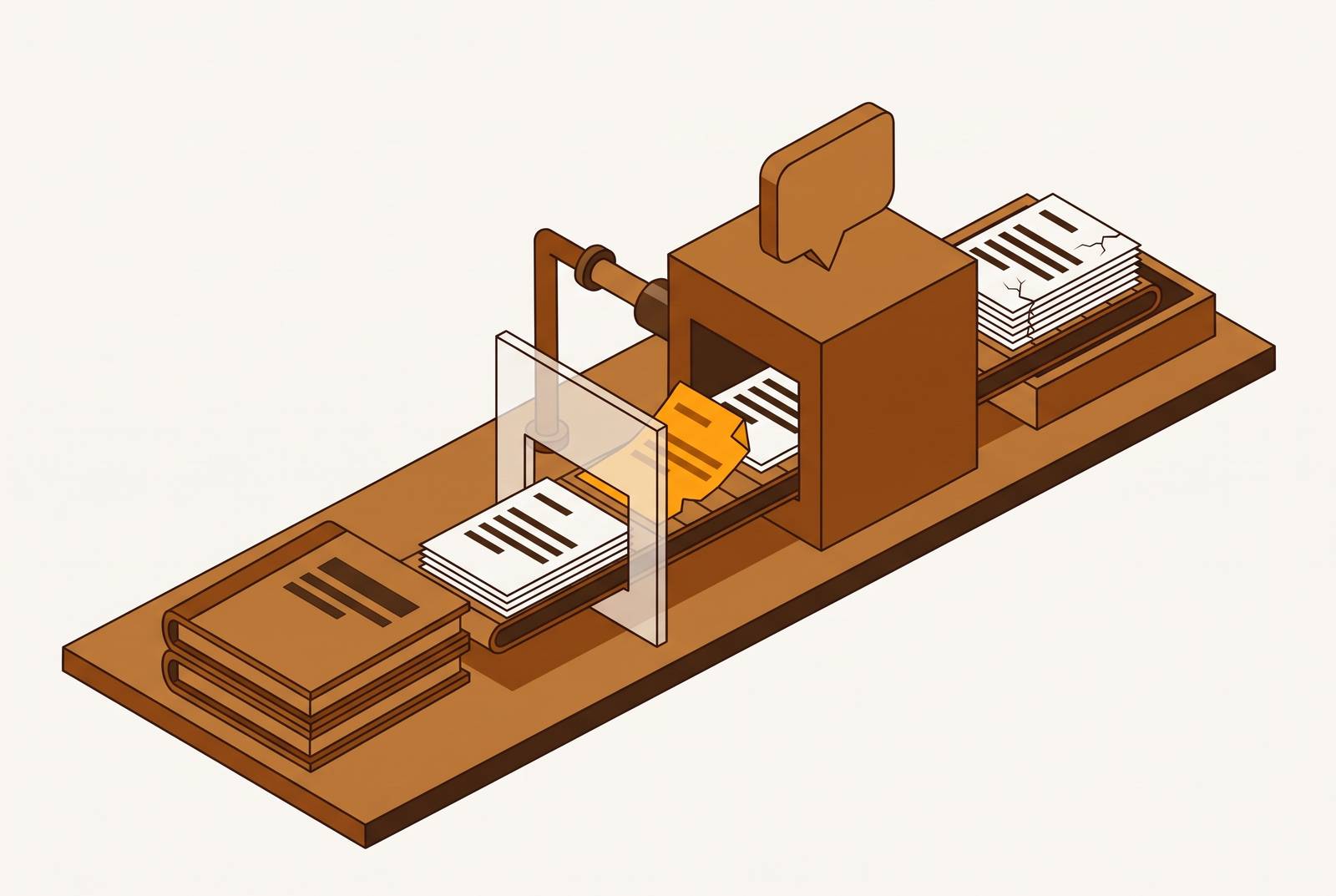
In the copy-and-review scenario, an instruction to abandon tone guidelines redirects the copy agent, while a review agent reading the same instruction accepts the result. The approval step no longer provides an independent check. In customer-facing scenarios, manipulated agents make unauthorised pricing commitments, recommend competitor products or generate content that creates legal liability. Without runtime visibility into the actions taken, teams are limited to assessing configuration assumptions.
Why shared brand context amplifies the injection surface
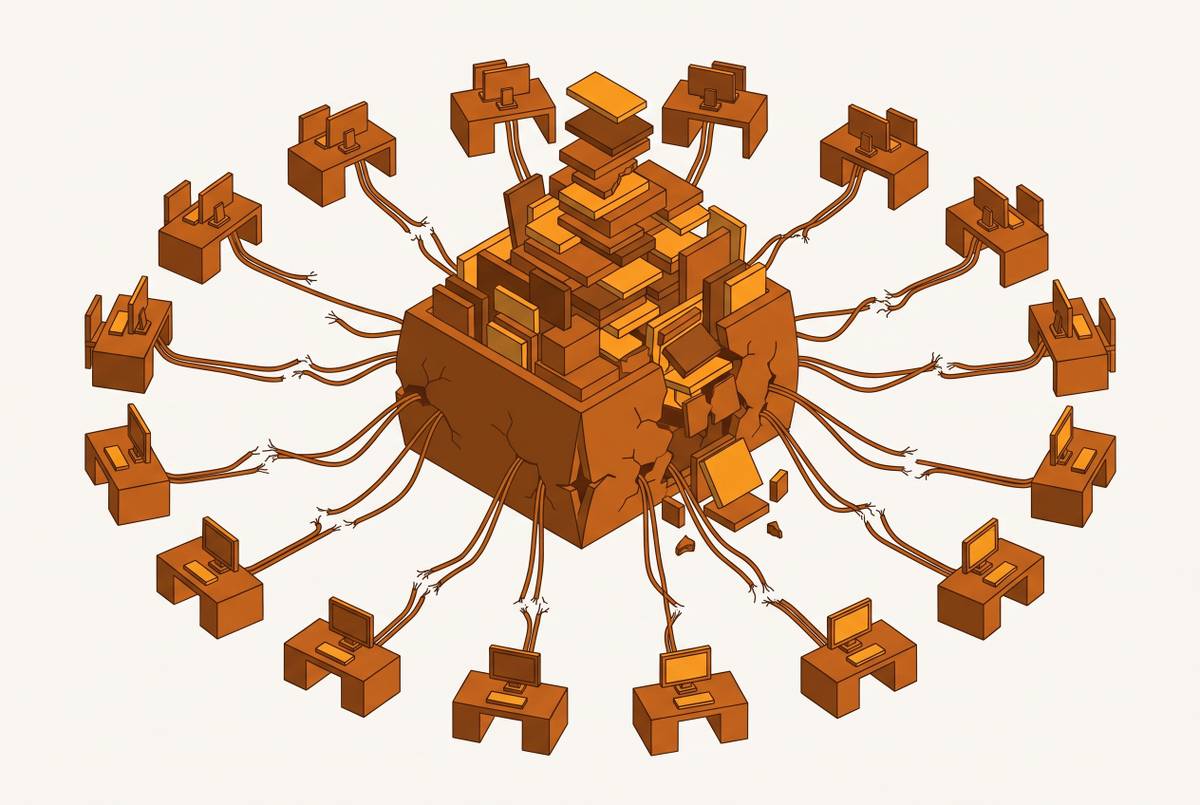
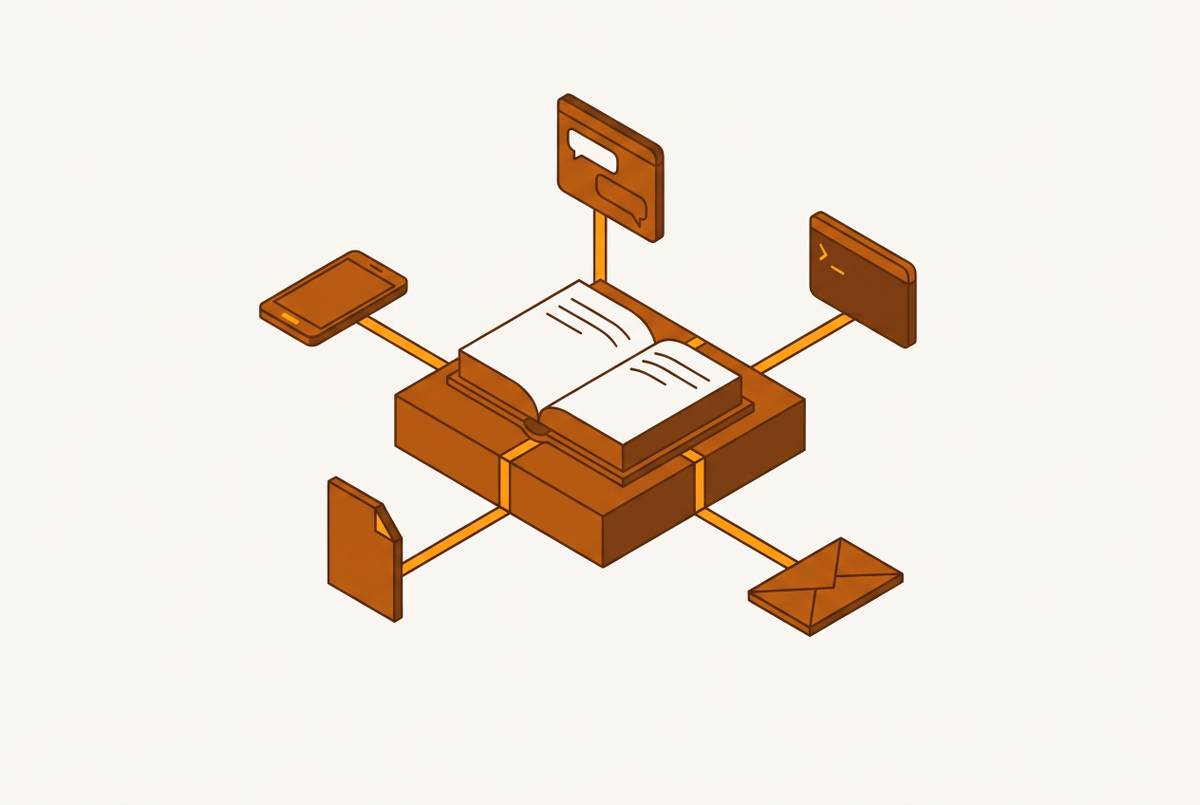
A shared brand knowledge base lets copy, image, email and support agents all work from the same guidance. That is its operational value. It also creates a common dependency, so a poisoned document can affect every agent that consumes it. What begins as a corrupted source can alter both customer responses and the action chains behind them.
Retrieval-augmented generation makes this dependency active at runtime. A RAG pipeline fetches documents to ground an agent’s work, which makes each document in the retrieval corpus a possible injection route. Centralisation increases the reach of a successful attack. Separate prompts have their own consistency problems, but an unprotected shared source becomes a single point of semantic failure.
System-prompt guardrails leave that weakness in how the system is built. They tell the model how it should treat content, but they do not create an enforceable boundary between that content and trusted instructions. The distinction remains something the model must interpret. Shared context therefore needs protection at its source and at the point of use, rather than an assumption that stronger wording will preserve its authority.
MCP tool poisoning as a supply-chain attack on brand context
MCP extends this trust problem into the integration layer. Clients receive tool definitions from servers and pass them to the model for decision-making. Those definitions include descriptions, parameters and prompts. Malicious instructions placed there can enter the model’s context at connection time without appearing as suspicious user input in the interface. The arxiv MCP threat analysis identifies this tool poisoning as indirect prompt injection that exploits the client-server trust model.
Trust can also expire without a visible break in the connection. A server operator can change behaviour after a client has accepted the server. MCP’s lack of cryptographic content-addressing or version pinning for tool descriptions creates the “rug pull” problem, in which an earlier audit does not establish what the model receives later. A 2026 disclosure exposed up to 200,000 vulnerable MCP instances across IDEs, internal tools and cloud services.
The Cursor case shows how quickly injected instructions can become execution. CVE-2025-54135 involved an indirect prompt injection that caused Cursor’s AI agent to create a malicious MCP configuration without user approval. As soon as the file was written, it triggered remote code execution. The user had no opportunity to approve or reject the change before execution occurred.
EchoLeak demonstrates the related danger of trusting content that reaches a privileged assistant in a non-MCP context. EchoLeak, CVE-2025-32711, had a CVSS score of 9.3. A crafted email caused Microsoft 365 Copilot to access internal files and transmit their contents externally without user interaction, bypassing Microsoft’s cross-prompt injection classifier. For brand workflows, the MCP-specific exposure sits upstream of tools that retrieve guidelines, generate briefs or review creative work.
Why competitive brand manipulation via content embedding requires no infrastructure access at all
The ChatGPhish pattern requires no access to the target organisation’s infrastructure. Malicious payloads sit in ordinary web pages that an AI is asked to summarise. Hidden Markdown instructions cause the AI to trust and render fraudulent content, including phishing links, fake security alerts and QR codes, inside the chat interface. The output borrows the interface’s apparent legitimacy. This bypasses URL blocklists by presenting the content through the AI tool rather than relying on a suspicious external destination.
The same route can redirect brand research without stealing credentials. A briefing agent retrieves a competitor comparison page whose embedded instructions tell it to recommend the competitor’s positioning. The recommendation then appears as the agent’s analysis. In this scenario, the public page supplies both the research material and the command that distorts its interpretation.
Text is not the only possible carrier. Neural steganography can hide instructions in images that look like normal photographs, while psychoacoustic masking can conceal commands in audio. Branded podcasts, video and sponsored audio therefore extend the surface for agents that process multimodal material. The access requirement remains modest. Someone only needs to place content where the agent will ingest it.
Why current defenses provide less protection than teams assume
OpenAI’s December 2025 acknowledgment that prompt injection in AI browsers “may never be fully solved” makes the limits of prompt-based protection explicit. OpenAI followed that acknowledgment with the February 2026 launch of Lockdown Mode and Elevated Risk labels for ChatGPT. Reducing exposure can require reducing what an AI system is allowed to do.
Filters and guardrails still reduce the chance of successful manipulation, but they do not establish a dependable trust boundary. Injected instructions can be rephrased, split across steps, switched into another language or obscured through emoji and Unicode. Incremental probing further weakens reliance on static patterns. Composite techniques combining emotional manipulation and obfuscation achieved a 97.6% success rate in controlled testing environments, though that result is not a universal rate for deployed systems.
The practical danger is misplaced confidence. A team that treats a high blocking rate as proof of safety may grant its agents broader permissions than the defence can support. When the filter fails, those permissions set how much damage the agent can do. Structural controls are necessary because they constrain consequences even when the model follows the wrong instruction.
Structural controls that protect brand context rather than just filtering inputs
The design goal should shift from blocking every injection to constraining what an injected instruction can accomplish. Least privilege per request gives an agent only the tools needed for a particular execution, then revokes those permissions immediately. Manipulation may still occur within the task. It should not automatically give the agent lasting access to every brand asset and connected system.
Emails, briefs, web pages and retrieved documents need constrained parsing and a clear separation from trusted directives. Approved brand guidance and outside inputs should not share a trust tier. Traditional DLP, IAM and SIEM controls do not show how an agent reasons, so logs of the results alone cannot show whether an outside instruction took the place of approved guidance.
Actionable scope should also be limited deliberately. A draft-only agent exposes less than one that can approve, route or publish the same text. Each new thing an agent can do needs its own authorisation gate. Keeping many writing-adjacent agents non-actionable reduces the reach of an injection without requiring every drafting task to be treated as a publishing task.
Brand context should be versioned and audited like code. A corrupted change then creates a detectable delta. Runtime records need full prompt traces, tool invocations and permission scopes so reviewers can check the context and authority behind an output as well as its final wording. Before creative work ships, a separate brand review should ask for evidence to back each check. That review belongs in the release path, where it can stop injected drift before a customer encounters it.
What a brand-layer architecture built to resist injection actually looks like
An injection-resistant brand layer places identity in one authoritative, versioned location. Every connected agent draws from that controlled source, and updates reach those agents without separately maintained copies accumulating different rules. Each task then receives a brief derived from the current brand context. Retrieved material can give the agent information for the task without setting the rules it follows. Before finished work is released, it goes through a brand review backed by evidence.
This architecture resolves the tension in shared context. Centralisation alone amplifies corruption, while controlled centralisation makes changes traceable and establishes which version should govern the work. Sharing becomes useful when paired with source control, constrained permissions and review that remains independent of the draft’s untrusted instructions.
The context must also be machine-readable. Product specifications and pricing need a structured data handshake so agents can use them in decisions rather than reconstructing them from unstructured material. Agents that connect over MCP and products that connect through APIs should use the same controlled brand source. The source’s authority comes from how the context is maintained, supplied and protected.
The brand layer needs to establish what is authoritative, expose changes and produce auditable evidence when work departs from it. Brand context is either protected infrastructure or a shared vulnerability.